5 min read
The 3 Budgeting Myths That Keep High-Earning Kiwis Stuck
Article by
Charlotte Barraclough · Chief Customer Officer
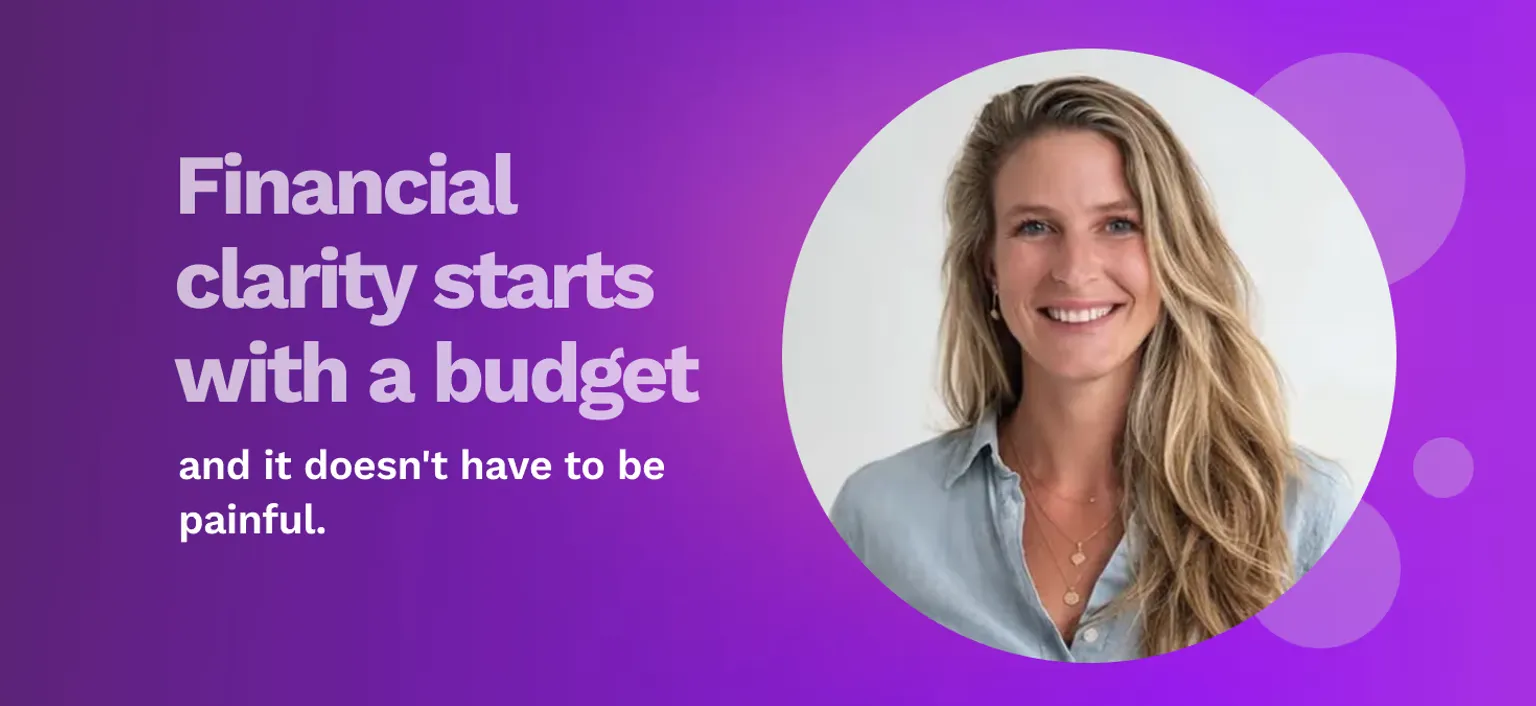
Hi there, I'm Charlotte, Chief Customer Officer at SortMe. In practice, that means I spend my days discussing the financial positions of everyday Kiwis — not just goals and projections, but real spending, managing cashflow and figuring out how to apply financial frameworks to personal situations. After thousands of these conversations, patterns and trends tend to emerge, a few of which make the headlines.
The most consistent one: the people with the most financial complexity are often the least clear on their own position.
A dual-income household, a rental property, two KiwiSavers sitting with banks, a Kernel or Sharesies account, and an accountant who's great at tax but doesn't touch personal wealth planning. It's one where a lot can slip through unnoticed. Not because anyone's being reckless, but because their financial life expanded and the infrastructure to manage it didn't keep pace. Lifestyle creep fills the gap, and all of a sudden, you're wondering where it all went.
Below are the three myths I've observed which inadvertently widen that gap.
Myth 1: Budgeting is for people who are struggling
Budgeting is a supremely unsexy word… point taken. That being said, the single biggest reason high earners don't track their expenses is the assumption that doing so means there isn't enough of a surplus.
It doesn't. The larger the margins, the larger the potential for lifestyle creep. That may not be a huge problem right now, but your earning potential is going to change over time.
Here's what I actually see in SortMe data: the households with the highest complexity — multiple properties, a business stake, two KiwiSavers, school fees, income protection premiums — are the ones who need financial clarity the most. Not because they're careless, it's because complexity hides things. It's not obvious, when you've got $850 coming out in monthly takeaways across three different payment methods, that you're spending that much on takeaways. Each transaction looks fine. The pattern is invisible until you look at it all at once.
More than half of New Zealanders worry about money either daily or weekly, according to the Financial Services Council.(1) That anxiety doesn't disappear with a higher salary. It often gets worse because the decisions get bigger and the consequences of getting them wrong get harder to reverse.
Budgeting (or cashflow management) isn't a sign of struggle. It's a response to complexity. The more moving parts you have, the more you need to see them together.
Myth 2: I already know what I'm spending — I don't need to track it
Most people think they know where their money goes, roughly. They're usually wrong — and not roughly wrong either.
A couple I spoke to recently couldn't account for about $3,400 a month once we connected their accounts. It wasn't fraud. It was the drip: subscriptions that had multiplied, $2,200 in insurance premiums they'd never compared, two KiwiSavers both sitting on Balanced when Growth would have compounded an additional $2,000–$3,000 a year for the last decade.
None of these things were a crisis. All of them were fixable — but only once they were visible.
Stats NZ data shows the average Auckland household mortgage payment rose nearly 5% in a single year.(2) With rates coming down from their peak, many fixed mortgages are rolling now — to rates lower than a year ago, but still meaningfully higher than when they were originally set. If you haven't checked where your mortgage refixes in the next 12 months, you're making a passive decision. That's still a decision.
A budget is all part of proper cashflow management. Targets and spend reports are not there to push penny-pinching prerogatives. When used properly they can help inform cashflow management and better enable informed financial decisions.
Myth 3: Budgeting software is too much effort to set up
I hear this a lot, usually from people who last tried to budget using a spreadsheet sometime around 2019. They remember the manual entry, the reconciling, the end-of-month audit that felt like homework.
Join us in the world of digital automation, welcome!
When you connect your accounts to SortMe, every transaction is categorised and tracked automatically. There is (nearly) zero reconciliation. Every transaction across all your connected accounts and cards is brought into one place — it only takes about 10 minutes for the data to sync once you've gone through the Akahu flow. Answers to questions like "how much did I spend on X last week" can be found in a matter of seconds.
What I tell people in this position
It's never been easier to spend money and it's never been harder to track it. Complexity further complicates financial clarity.
Stop thinking about budgeting as something that's going to change your life in a weekend. Start thinking about it as a practice — a 10-minute weekly check-in that keeps you aware.
You don't have to build a perfect system. You just have to be able to see your money clearly enough to make better decisions.
The couple from the example above moved their KiwiSavers to Growth, refinanced the rental mortgage, and cancelled four subscriptions they'd forgotten about. That's not life-changing — until you add it up over five years and realise it's the equivalent of two years of school fees.
The hardest thing is starting. After that, the data does the work.
Charlotte Barraclough is the Chief Customer Officer at SortMe. She works with New Zealand households every day — mostly the ones who earn well and still wonder where it all goes.
Sources
- Financial Resilience Index 2025: How to Make Your Money Work Smarter — Financial Services Council NZ
- Household Income and Housing-Cost Statistics: Year Ended June 2025 — Stats NZ
- Master the 50/30/20 Rule for Smart Budgeting — Māngere Budgeting Services