5 min read
Nearly Half of Kiwis Are Worried About Losing Their Job — Here's How to Financially Prepare

Article by
Carl Thompson · CEO and Co-founder of SortMe
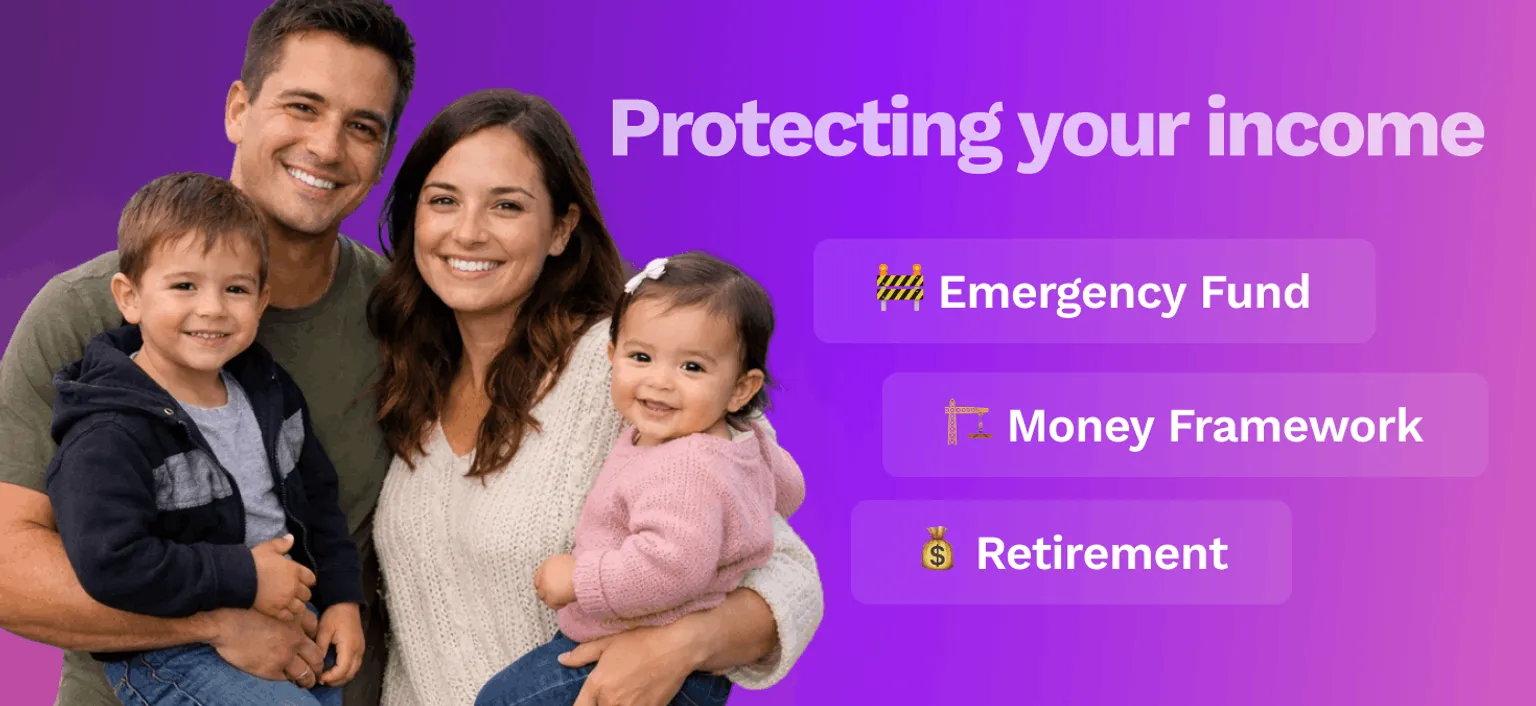
If you've been feeling uneasy about your job lately, you're far from alone. A recent Westpac-McDermott Miller Employment Confidence survey found that nearly half of New Zealanders are worried about losing their job, and more than 80% of those people have already started cutting back on spending (1). Unemployment has climbed to 5.4%, the highest since September 2015 (2). Treasury reckons it'll stay above 5% for the rest of 2026 (3). And when 17,000 people show up to a single job fair in Auckland (4), the anxiety stops being abstract. It's real, it's everywhere, and most households aren't ready for it.
That financial anxiety doesn't have to turn into paralysis, though. It might actually be the push a lot of us need to get our money properly sorted. That's a big part of why I built SortMe.
Most households aren't ready for a disruption
Only one in three New Zealanders could last more than a month financially if they lost their job (7). Let that sink in. Meanwhile, 73% of Kiwis say they're extremely or moderately concerned about the cost of living (5), and according to the NZCTU's Mood of the Workforce 2026 report, six in ten workers say jobs are currently hard to get (6).
None of this surprises me. Kiwis are notoriously bad at saving. We see this across many different industry insights. At SortMe, we try to educate and nudge our users to start short and long-term savings. And what we consistently see is that users who have some savings reduce their financial anxiety significantly.
The worry feeds on itself, though. You stress about your job, so you avoid checking your bank balance, which means you have no idea where you actually stand, which makes the stress worse. The way to break that cycle is by building what I call a "financial framework."
Why a financial framework matters more than a budget spreadsheet
Most people think getting their finances in order means writing a budget. Budgets are useful, sure. But I'd argue they're only part of the picture.
A budget is great to understand your means and create some guardrails. A financial framework is different. It's a structure of accounts and automatic transfers that move money into accounts for different purposes.
The trick is keeping it simple. I've seen plenty of people go overboard: a separate bank account for every spending category, dozens of automatic transfers, the whole thing so complicated it falls apart within weeks. What I recommend instead is what I call the four-account approach:
1. A household account where your income lands and fixed expenses come out.
2. A spending account for day-to-day lifestyle spending (eating out, entertainment, personal stuff).
3. A short-term savings account, which is basically your emergency fund for unexpected bills and bigger expenses.
4. A long-term savings account for retirement or major goals down the track.
We see people getting this wrong a lot. They'll create a bank account for every category, when they should be keeping it simple and high-level. The four-account structure works for most households because it automates where money goes without you needing to micromanage every dollar.
Building your emergency fund, even when money is tight
The emergency fund is the account that matters most right now. Financial experts generally recommend three to six months' worth of expenses (7), which works out to roughly $15,000 to $30,000 for an average Kiwi household. I know most people aren't starting anywhere near those numbers.
My recommendation for any new user is to seriously look at creating a short-term savings account. Initially aim for three to five thousand dollars, then build it up to three months' worth of income. That acts as your unemployment buffer.
Setting up an emergency fund goal in SortMe is a great way to allocate an amount each pay cycle. You don't have to start big, just start. Thirty dollars a week is better than nothing.
I'd also flag income protection insurance as something people overlook. It's particularly relevant when a household has multiple people relying on a single income.
How SortMe helps you stress-test your spending
When you're worried about job security, the smartest move is figuring out what your life actually costs. Not what you reckon it costs. What the numbers say. SortMe's spending trends and category breakdowns lay that out clearly.
If you did lose your job, you could very easily use SortMe to re-jig your budget to align with the new situation. It helps you find savings and identify areas to pull back on quickly.
Instead of guessing where cuts might come from, you see actual patterns across categories: groceries, subscriptions, transport, eating out. That makes it straightforward to decide what's essential and what could be paused or reduced. Budget alerts nudge you before you overspend in a category, and savings tracking lets you watch your emergency fund grow week by week.
Setting up a framework gives you peace of mind. When money is allocated and flowing into the right areas, you sleep better.
The one thing I want every worried Kiwi to hear
Start taking money seriously. Allocate your income, and build towards your financial freedom today.
It doesn't require a perfect plan or all the answers. Just one step. Open the savings account. Set up a $30 automatic transfer. Sit down for ten minutes and look at where your money actually went last month.
I see what happens when people don't. Kiwis are brought up with a "she'll be right" attitude towards money. We never learn the value of saving or how compounding interest works. So people fall into a trap of placing their financial freedom on some future event, an inheritance, a salary increase, or the idea that they'll sell a business one day. We need to hope for the best and plan for the worst. We can't peg our financial future on hopes and dreams.
The job market is shaky. That part you can't control. What you can control is whether your household has a financial framework underneath it. SortMe connects to your bank accounts and gives you a clear picture of your spending, savings, and financial health. If you haven't looked at your numbers yet, this week is a good time to start.
Sources
- Westpac-McDermott Miller Employment Confidence Survey — Interest.co.nz
- Unemployment rate at 5.4 percent in the December 2025 quarter — Stats NZ
- Half Year Economic and Fiscal Update 2025 — NZ Treasury
- 'It's a struggle': 17,000 people descend on Auckland job fair — 1News
- Cost of living concerns still top of mind — Westpac NZ via Scoop
- Mood of the Workforce 2026 — NZCTU
- Emergency Fund — Saving for When it Matters — MoneyHub NZ