5 min read
Petrol just jumped 20% in a month — do you know what that's actually costing your household?

Article by
Hugo Jonston · Resident Money Writer
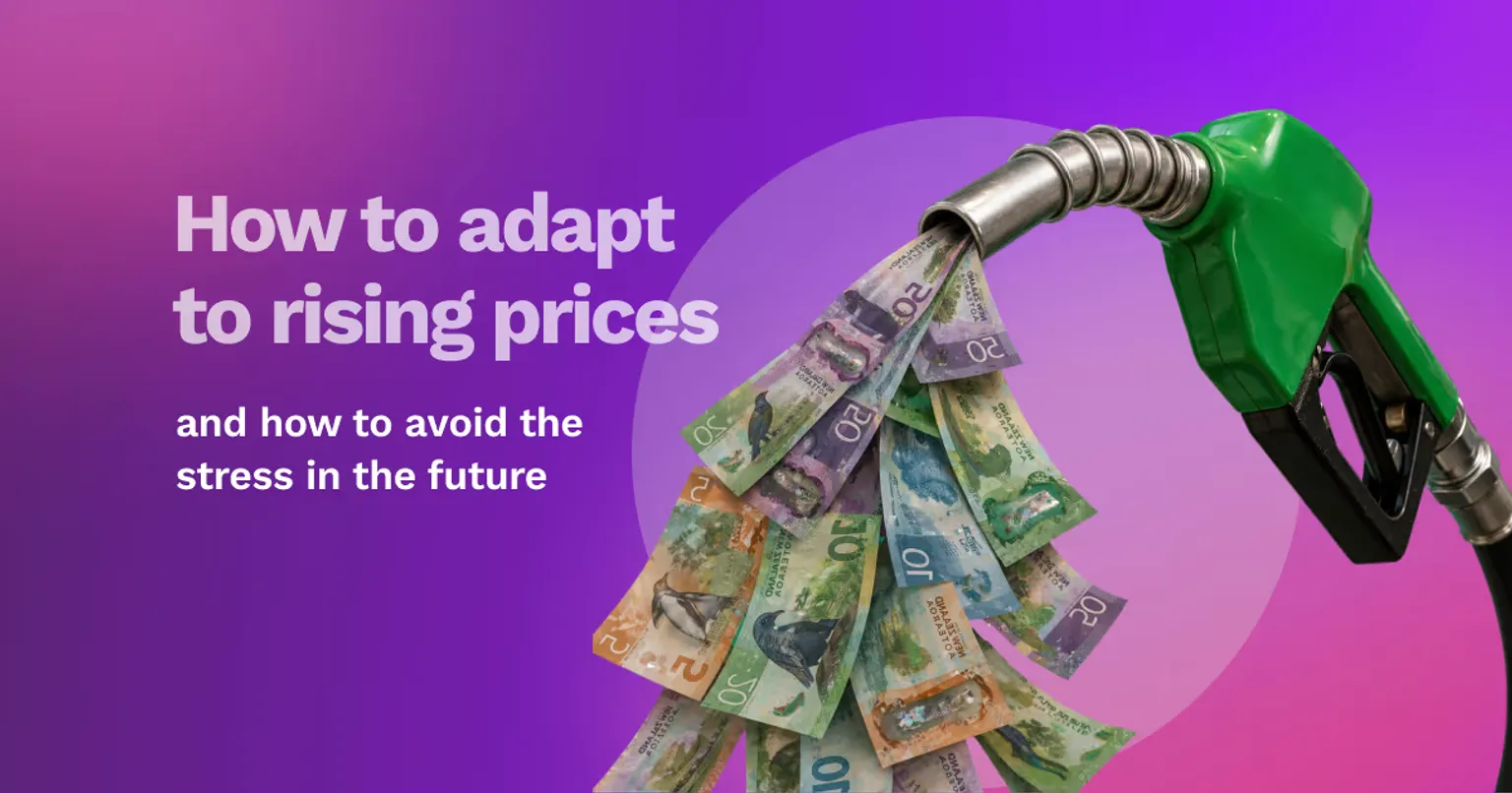
91 octane in Auckland was $2.50 a litre at the start of March. Today it's $3.04 (1), and economists are openly discussing $4 a litre as a realistic scenario if Middle East tensions don't ease. That's a 20% jump on a non-discretionary line item, in six weeks, with no warning.
For most established Auckland households, the headline number isn't actually the problem. The problem is what it does to the rest of the budget once the flow-on costs start landing, and how quietly that happens.
To work through what a spike like this is actually doing to households, we asked Jamie Reynolds, a financial adviser at Naked Finance (FSP596030), what he's telling clients right now. His advice is here, alongside SortMe's transaction data on how shocks like this play out across the rest of your spending, and what to do this week to soften the next one.
The real cost on your budget (it's bigger than you think)
For a two-car Auckland household doing roughly 400km a week combined (a standard commute-plus-weekend pattern), a 50c/litre jump at the pump works out to around $20 more every week. That's about $1,040 a year, straight out of cashflow, with nothing to show for it.
Stats NZ puts the average New Zealand household petrol spend at $48–50 a week already (2). A 20% jump lifts that closer to $60, and two-car Auckland families are well above the national average on both the starting number and the increase. Over three years, roughly the length of a fixed mortgage term, that's $1,500 to $3,000 of extra petrol spend you weren't planning on. Every year, if prices stay where they are.
It isn't just petrol, either.
The flow-on costs you're already paying for (and probably can't see)
Fuel isn't just a line item in your transport category. It's an input into almost everything else your household pays for: groceries (freight margin), delivery fees, courier charges, trades quotes, Uber rides, school bus contracts. When fuel is up 20%, operators either absorb it or pass it on. Most merchants will pass it on to their customers and they wont tell you.
SortMe's transaction data shows a consistent pattern across price shocks. Transport spend rises first. Groceries and services move about six weeks later. Discretionary spend (dining, subscriptions, weekend stuff) quietly shrinks to absorb the difference. The household doesn't feel like anything has changed. The end-of-month picture says otherwise.
An adviser's take: what to actually do this month
Jamie's first instinct was to make every journey count. Don't take trips you don't need to take, combine errands where you can, and where public transport is realistic, use it. Auckland Transport's AT HOP weekly fare cap sits around $50 across most zones (3), so if your commute is already pushing you past $50 a week in petrol alone, the maths is already tipping.
The bigger point he made was about the saving most households don't see at first. When you actually drive less, you're not just cutting fuel. You're cutting maintenance, tyres, time at the mechanic, and parking. CBD parking runs $25 to $40 a day on top of that. A car doing 40% fewer kilometres becomes meaningfully cheaper to own, not just to fill, and the case for trimming one car's usage (not selling it) gets more interesting.
Where Jamie was firm, and worth quoting, was on what shouldn't get cut when things tighten:
"Times like these tend to trigger reviews because they act as a catalyst to trim the unnecessary fat from all aspects of life. We believe in ensuring a survivable position rather than best case scenario, otherwise insurances become the first thing to drop when they should be your last line of defence."
When households get squeezed, life insurance and income protection often go first because they feel optional. They're not. A fuel-driven squeeze is uncomfortable. An uninsured income loss is catastrophic. Different category of problem.
Build a buffer before the next shock lands
The other side of this is having money set aside before you need it. That's the backup that turns a price spike from a stressful event to just an inconvenience.
Most established households know they should have one. Fewer do. The principle is simple: a percentage of your savings ringfenced into a short-term emergency fund (call it a slush fund), kept separate, only touched when something like this lands. Three months of essential running costs is a common target. Even one month is a meaningful start.
A household with a buffer decides calmly whether to absorb a 20% fuel jump or trim elsewhere. A household without one makes the same decision under pressure, usually by quietly cutting the wrong thing. The financial difference is often small. The reduction in anxiety is enormous.
If this oil crisis has caught your household without that savings cushion, treat it as the prompt to build one. Even $50 a week into a separate account gets you a meaningful buffer by spring.
Where SortMe fits, and what to look at tonight
Most households can tell you what they earn. Fewer can tell you what they actually spent on fuel last month, versus six months ago. That's the gap SortMe is built to close.
The Cashflow and Transactions views pull every transaction from every account you connect, categorise automatically, and lay it out month-on-month. You can open the app tonight and see, without a spreadsheet, exactly what the fuel spike has cost your household since February. You'll also see where the flow-on costs are landing, because grocery and delivery creep shows up in the same view.
In Jamie's framing, a tool like SortMe tells the story and shows the client how their actions shape their future. That's the useful bit. Not budgeting for budgeting's sake. Financial oversight is what matters. The real numbers, so you can make meaningful decisions.
Your next step
Do these five things to get your money sorted and keep the anxiety at bay:
- Open SortMe (or any tool that shows you transactions in one view) and look at your transport category for January, February, March, and April. Identify the changes.
- Add a 30% buffer to allow for extra costs across groceries and services over the next two months.
- Protect your insurance and mortgage position before trimming anywhere else. Those decisions save you thousands a year for the life of the loan, not just through this fuel cycle.
- If you don't already have a short-term emergency fund running, start one this week. Even a small automatic transfer is enough to begin.
- If the number's bigger than you can absorb comfortably, that's a conversation with a financial adviser, not a DIY project.
Jamie's closing framing is a useful one to sit with: don't limit lifestyle, be intentional with travel, and make sure you're getting the most out of your resources.
Petrol isn't going back to $2.50 this month, and possibly not this year. Prices are quick to go up and slow to come down. Households that understand their expenses and adjust deliberately come out of cycles like this in much better shape than households that let the discretionary spend quietly disappear.
Hope for the best, plan for the worst.
Sources
- Weekly Fuel Price Monitoring, Ministry of Business, Innovation & Employment — mbie.govt.nz
- Petrol drives up household transport spending, Stats NZ — stats.govt.nz
- 7-day fare cap for Auckland public transport, Auckland Transport — at.govt.nz